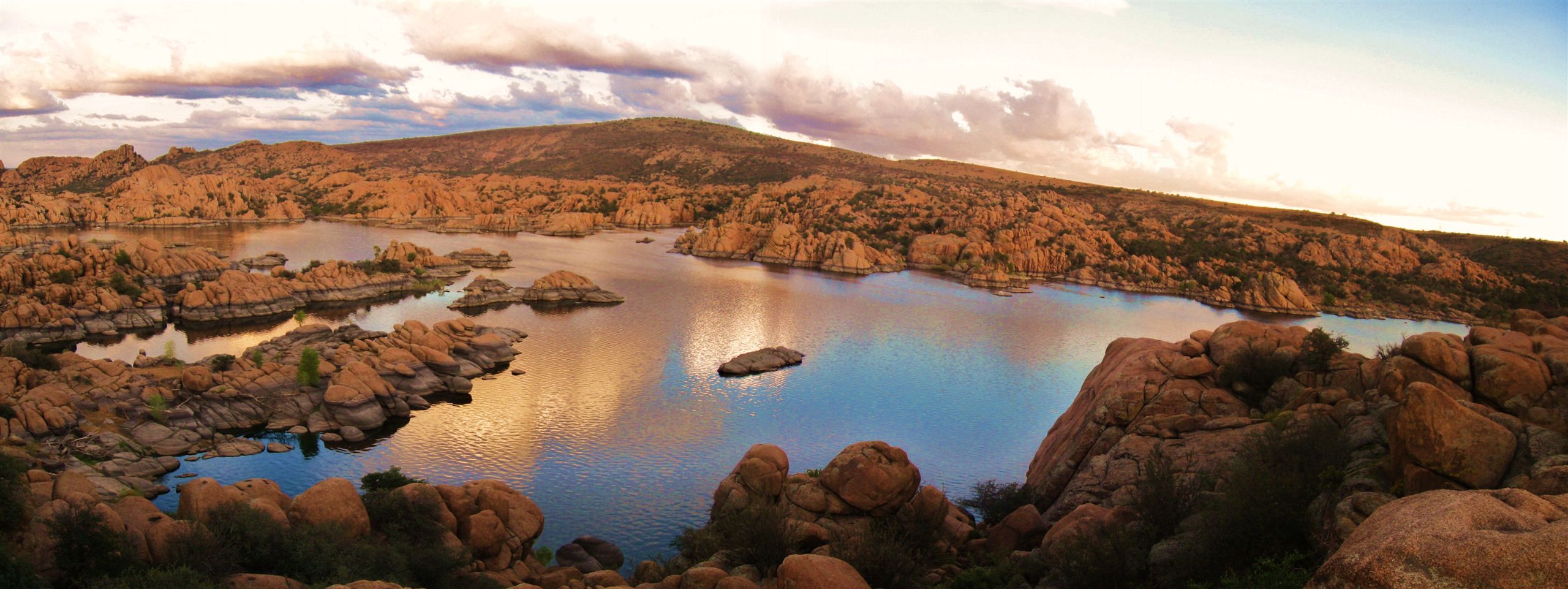
← Kari's Hub Watson Lake and the Granite Dells at golden hour, Prescott Arizona
Kari Hughes · Compass Arizona

Northern Arizona
Homestead Guide

Helping You Build Your Arizona Next Chapter — wells, septic, land, horses, building, and the honest details nobody puts in the listing.

01

Welcome to the High Country.

There's a moment that happens to almost everyone who drives north out of the valley. Somewhere past the saguaros, the air cools, the granite starts to rise, and the sky gets bigger. People come up for a weekend and go home asking the same question: "Could we actually live like this?"

The honest answer is yes — and it's more attainable than most people think. But homestead living is genuinely different from buying a home in a subdivision. Your water may come from your own well. Your wastewater is handled on your own land. Your heat might arrive on a propane truck. Your road might be maintained by you and your neighbors, not the county.

None of that is scary. All of it is learnable. This guide exists so you can walk onto any piece of land in the Prescott area already knowing what questions to ask — before you fall in love with the wrong parcel, and before you make an offer on the right one.

I wrote this the way I'd explain it to a friend at a kitchen table — no jargon, no pressure, just the things I genuinely want you to know. When you're ready to look at real properties, I'm here.

— Kari
02

Is Homestead Living Right for You?

Acreage rewards a certain kind of person — and it asks something in return. Here's the honest trade:

What you gain

  • Privacy. No shared walls, no neighbor's porch light in your bedroom window, no HOA newsletter about your trash cans.
  • Freedom. Room for horses, a shop, a garden, a casita for family, or simply nothing at all — silence is a feature.
  • Connection to the land. Sunrise over your own fence line changes how a day starts. It just does.
  • Space for the whole story. Multi-generational setups, animals, hobbies that need a barn — the life that doesn't fit on a city lot.

What it asks of you

  • Maintenance. Wells, septic, propane, and gravel driveways all need periodic attention. Most of it is scheduled and predictable — but it's yours.
  • Distance. Groceries, medical care, and a good latte may be 15–35 minutes away instead of five.
  • Self-reliance. A generator, a full pantry, and a plan for snow days aren't paranoia up here — they're just good housekeeping.
  • Patience with the process. Buying and building on land takes longer than buying a finished home. Worth it — but real.

If the first list makes your heart rate go up and the second list feels like a fair price, you're the kind of person this life was built for.

03

The Area Guide.

Everything within about 40 minutes of Prescott gets called "Prescott" by out-of-towners — but these communities feel genuinely different from each other. Price, elevation, lot size, commute, and personality all shift as you move around the map.

Williamson Valley

Wide-Open Acreage · Quiet Luxury
Typical Lots2–10+ acres
Elevation~4,600–5,000 ft
Commute to Prescott20–30 min
FeelRanch country with polish

Best for: people who want real distance between rooftops without giving up a reasonable drive to town. Sweeping grassland views, custom homes on acreage, and some of the area's best horse properties. Mostly wells and septic; verify road maintenance parcel by parcel.

Chino Valley

The Homestead Heart
Typical Lots1–5+ acres
Elevation~4,750 ft
Commute to Prescott20–25 min
FeelGenuine rural, working land

Best for: horses, 4-H kids, gardens, and anyone who wants land that works. Flatter and more open than Prescott proper, with irrigated parcels, feed stores, and a real agricultural backbone. Often the best acreage value in the quad-cities.

Prescott

The Hub · Pines & History
Typical LotsCity lots to acreage on the edges
Elevation~5,400 ft
CommuteYou live at the destination
FeelHistoric small city in the pines

Best for: people who want the courthouse square, restaurants, trails, and medical care minutes away — with homestead-feeling properties tucked into the pines on the outskirts. Higher price per acre, but you're buying walkability, elevation, and the trees.

Prescott Valley

Convenience · Newer Builds
Typical LotsSubdivision lots to 1–2 acres
Elevation~5,100 ft
Commute to Prescott15–20 min
FeelPractical, growing, connected

Best for: buyers who want newer construction, town utilities, shopping, and healthcare close by — with mini-acreage options on the edges. The easiest "soft landing" into high-country living.

Dewey-Humboldt

Small-Town In-Between
Typical Lots1–5 acres
Elevation~4,500–4,600 ft
Commute to Prescott20–25 min
FeelOld Arizona, unhurried

Best for: people who want quiet acreage and a slower pace, ten minutes from Prescott Valley's conveniences. A mix of horse properties, older homesteads, and newer builds — often at friendlier price points.

Paulden

True Homestead Country
Typical Lots2–40 acres
Elevation~4,400–4,500 ft
Commute to Prescott35–40 min
FeelBig sky, big parcels, few rules

Best for: the most land for the least money and a genuine off-the-beaten-path homestead mindset. Fewer restrictions, more water hauling and off-grid setups — do your utility homework carefully out here, and it rewards you.

Walker

Cabin Country · In the Pines
Typical Lots1–5 forested acres
Elevation~6,000–6,500 ft
Commute to Prescott25–35 min, winding
FeelMountain hideaway

Best for: people who want tall ponderosas, cool summers, and a true cabin-in-the-woods feel close to town. Real winter here — snow, chains some mornings, and fire-awareness as a way of life. Magical, with eyes open.

Lot sizes, drive times, and elevations above are honest ballparks, not gospel — every parcel is its own story. This is exactly the conversation I love having with buyers over coffee, with a map on the table.

— Kari
04

Water & Wells.

Water is the first question on any rural parcel — and the one that most changes a property's real value. In the Prescott area you'll generally see three setups:

Private wells

Your own well on your own land. Depths and flow rates vary widely by area — two parcels a mile apart can drill very differently. On existing wells, ask for the well registration, drilling depth, age of the pump, and recent history. A flow test and water-quality test during your inspection period are standard and worth every penny.

Shared wells

Common and workable — several homes drawing from one well under a recorded shared well agreement. Read that agreement before you write an offer: who pays for the pump when it fails, who maintains the line, and what happens when someone sells.

Water hauling & storage

In parts of Paulden and other outlying areas, homes run beautifully on hauled water and a storage tank (often 2,500–10,000 gallons). It's a lifestyle rhythm, not a hardship — but know the delivery cost and the tank's age going in.

Questions to ask on every property

  • Is the well registered, and what do the drilling records show?
  • What's the measured flow rate — and when was it last tested?
  • Any shared well agreement recorded? What are my obligations?
  • If vacant land: what have neighboring wells hit, at what depth and cost?
  • What does a water-quality test show (hardness, arsenic, bacteria)?
05

Septic Systems.

If the property isn't on a sewer line, it treats wastewater on-site — usually a septic tank and leach field. This intimidates first-time land buyers far more than it should.

How it works

Household water flows to a buried tank where solids settle; the clarified water disperses into a leach field and filters naturally through the soil. No moving parts in a conventional system. Designed and maintained well, a septic system runs quietly for decades.

What Arizona requires at sale

Arizona requires a septic inspection at transfer of ownership — the system is inspected, pumped as needed, and the transfer is reported. As a buyer, read that inspection report carefully: it tells you the tank's condition, the system type, and any repairs needed.

Ongoing care

  • Pump the tank roughly every 3–5 years (a few hundred dollars).
  • Keep vehicles and structures off the leach field.
  • Be sensible about what goes down the drain — the system is biological.

The honest numbers

A failed conventional system can cost roughly $5,000–$15,000+ to replace depending on soil and system type — which is exactly why the inspection matters. On vacant land, a perc test (how fast soil absorbs water) tells you what kind of system the lot can support before you buy.

Common misconceptions

  • "Septic means it smells." A healthy system doesn't. Odor is a symptom, not a feature.
  • "It's constant work." It's a pump-out every few years and common sense in between.
  • "City sewer is always better." Sewer is a monthly bill forever; septic is occasional maintenance you control.
06

Electric.

Most of the quad-cities area is served by APS, with electric co-ops serving some outlying pockets. On a home that's already built, power is usually a non-issue. On vacant land, it's one of the biggest line items to verify:

  • Where is the nearest power? Extending lines can run tens of thousands of dollars per stretch — get a written estimate from the utility before you close, not after.
  • Overhead or underground? Underground costs more up front and looks better forever.
  • Solar. Northern Arizona sun is generous. Grid-tied solar trims bills; full off-grid systems with battery storage are a proven lifestyle out here — several of the area's prettiest homesteads run on them.
  • Backup generators. A propane-fed standby generator is a common and sensible companion to rural power — outages happen in monsoon and snow.
07

Propane.

Natural gas lines rarely reach rural parcels — propane fills that role for heating, cooking, water heaters, fireplaces, and backup generators. A tank in the yard (often discreetly buried) and scheduled deliveries: that's the whole system.

  • Tank ownership vs. lease. A leased tank means low upfront cost but you buy propane from that supplier. An owned tank (roughly $1,500–$3,500 installed, size dependent) lets you shop every supplier for the best per-gallon price. If a seller owns their tank, that's a quiet little asset that conveys.
  • Typical sizes. 250, 500, or 1,000 gallons. Bigger tanks let you fill in summer when prices dip.
  • Typical costs. Expect a few deliveries per year; a well-insulated home at this elevation might use in the neighborhood of $1,200–$2,500/year depending on size, usage, and prices.
  • Ask at purchase: Is the tank owned or leased? How old? Buried or above ground — and if buried, when was it last inspected?
08

Internet & Cell Service.

Good news: working remotely from a homestead is completely realistic now. The catch: coverage changes ridge to ridge, so never assume — verify at the exact address.

  • Fiber & cable keep expanding through Prescott, Prescott Valley, and Chino Valley cores. Some acreage just outside town has it; some doesn't. Check by address, not by town name.
  • Starlink has genuinely changed rural life here — fast, reliable satellite internet on parcels that had nothing five years ago. Many Paulden and Walker households run on it happily.
  • Fixed wireless providers serve line-of-sight areas from local towers — solid where available.
  • Cell coverage varies by carrier and terrain. Granite and canyons make dead spots. On your showing visit, pull out your phone and walk the property — it's the most honest coverage map there is.

Before you buy

  • Run each provider's address check for the exact parcel.
  • Ask the sellers (or neighbors) what they actually use and what it costs.
  • If you work from home, test a video call from the property during your inspection period. Seriously.
09

Roads & Access.

"How do I get to it?" matters more on acreage than anywhere else — legally and practically.

  • County-maintained paved roads are the gold standard: plowed, graded, and someone else's job.
  • County-maintained gravel is common and generally great — graded periodically, passable year-round with sensible driving.
  • Private roads are maintained by the property owners who use them — sometimes through a formal road association with dues, sometimes through a handshake. Ask which one you're buying into, what it costs, and how disputes get settled.
  • Easements. If you cross someone else's land to reach yours, that access must be a recorded legal easement — not a tradition. Title work confirms this; never skip it on rural land.
  • Winter access. At Walker and Prescott elevations, ask who plows, how quickly, and whether the driveway faces north (shade holds snow and ice for days).
10

Horses & Livestock.

This is horse country — genuinely. Chino Valley, Williamson Valley, Paulden, and Dewey-Humboldt are full of people living the horse life you're picturing. A few honest fundamentals:

  • Zoning first. Animal allowances are set by zoning, not by vibes — how many animals per acre, and which kinds. Verify the parcel's zoning designation before you assume.
  • Usable land beats total land. Five steep, rocky acres can hold fewer horses than two flat ones. Walk the ground.
  • Water needs are real. A horse drinks 5–15 gallons a day. Confirm the well or water supply supports the herd you're planning, especially in June.
  • Fencing. Existing good fencing is worth thousands — pipe fencing especially. Budget honestly if you're starting from bare land.
  • Barns & shelters. At minimum, animals need shade and windbreaks here. Existing barns, stalls, and turnouts should factor into what you're willing to pay.
  • CC&Rs can override everything. Even properly-zoned land can carry deed restrictions limiting animals. Read them (chapter 11).
11

Zoning & Restrictions.

Three layers of rules can apply to any parcel — and buyers routinely check only the first:

1. County zoning

Yavapai County zoning sets the baseline: minimum lot sizes, allowed uses, animal counts, setbacks, and whether you can put a second home, guest house, or manufactured home on the parcel. The county's Development Services office will tell you a parcel's zoning — it's public information, and worth a phone call before you get attached.

2. CC&Rs (deed restrictions)

Covenants recorded against the land itself, even where there's no active HOA. They can limit animals, RVs, building materials, minimum home sizes, and more — and they run with the land, meaning you inherit them. Read the CC&Rs during your inspection period, every time. "No HOA" does not automatically mean "no restrictions."

3. HOAs

Less common on true acreage, but some large-lot communities have them — often light-touch road associations, occasionally full architectural review. Know the dues, the rules, and the personality before you commit.

Short-term rentals

Thinking about renting a casita or the whole place? Arizona is relatively STR-friendly at the state level, but CC&Rs and HOAs can prohibit it outright, and local rules evolve. If rental income is part of your plan, verify it in writing for that specific parcel — before you buy, not after.

12

Buying Land: The Questions That Matter.

Before any offer on vacant land, you (and your agent) should be able to answer every one of these:

  • Water: Well on-site, shared, needs drilling, or hauled? What have neighbors' wells cost and hit?
  • Septic: Has a perc test been done? What system will the soil support?
  • Power: How far to the nearest line, and what does the utility quote to bring it in?
  • Access: Legal, recorded access? Who maintains the road, and what does it cost?
  • Zoning & CC&Rs: What can I actually build and keep here — homes, casitas, animals, shops?
  • Boundaries: Is it surveyed? Are the corners marked, and do fences match the deed?
  • Floodplain & drainage: Where does monsoon water go when it arrives all at once?
  • Buildability: Slope, rock, soils — where does the house actually sit, and what will the site work cost?
  • Fire: What's the wildfire risk profile, and what does insurance look like at this address?
  • The exit: If plans change, is this parcel one someone else will want too?

This checklist is the difference between buying a dream and buying a lesson. It's also exactly what I walk through with my land buyers, parcel by parcel — you don't have to hold all of this in your head alone.

— Kari
13

Building a Home.

Building on your own land is one of the most satisfying things a person can do — and it goes best for people who respect the sequence:

  • 1. Utilities before design. Confirm water, power, and septic feasibility (perc test) before you spend a dollar on plans. The land tells you what's possible; the house comes second.
  • 2. Site preparation. Driveway, building pad, trenching for utilities. On rocky or sloped parcels this is a real budget line — sometimes tens of thousands. Get site-work bids early.
  • 3. Permits. Residential building permits run through Yavapai County (or the city, inside city limits). Straightforward, but allow weeks-to-months in your timeline, not days.
  • 4. Builders. The Prescott area has a deep bench of custom and semi-custom builders, plus quality barndominium and manufactured options that make acreage attainable. Interview more than one; walk their past work.
  • 5. Budget honestly. The house is only part of it — well, septic, power extension, driveway, and site work can add $50,000–$150,000+ on raw land before the slab is poured. Budgeting for it up front is what keeps the dream fun.
14

Seasonal Living.

Four real seasons is a huge part of why people move up — here's what each one actually asks of a homesteader:

  • Winter. Yes, it snows — magically and briefly at 5,000 ft, more seriously up toward Walker. Know who plows your road, keep the propane tank filled ahead of storms, and enjoy the quietest mornings of the year.
  • Monsoon (roughly July–September). Dramatic afternoon storms, fast water in the washes, and the best skies you'll ever photograph. Respect drainage on your parcel and never build in the path the water wants.
  • Wind. Spring blows, especially across open country like Chino Valley and Paulden. Good fencing, secured outbuildings, and windbreak trees aren't decorative out there.
  • Fire awareness. Wildfire is part of life in the West. Defensible space around structures, fire-wise landscaping, and an insurance conversation before closing are simply what responsible ownership looks like here — especially in the pines.
  • Road care. Gravel drives want a fresh load of material and grading every few years. Budget a little; it keeps everything else easy.
15

Budget Planning.

Sample ownership costs for a typical established homestead property in this area. Every property differs — use this to build intuition, not a contract:

ItemTypical RangeRhythm
Well (power + maintenance reserve)$300–$800/yrPump replacement every 10–15 yrs (~$2K–$5K)
Septic pumping$400–$700Every 3–5 years
Propane$1,200–$2,500/yr2–4 deliveries/yr, usage dependent
Internet (fiber/Starlink/wireless)$50–$150/moMonthly
Private road share$0–$500+/yrVaries by road association
Homeowner's insuranceVaries — quote earlyFire exposure affects rates; shop it
Property taxesGenerally friendly vs. other statesSemi-annual; check the parcel's current bill

Ranges are honest local ballparks for planning purposes, not quotes. Insurance and taxes are parcel-specific — we pull real numbers on any property you're serious about.

16

Kari's Favorites.

Because the whole point of moving here is the living part. A few of mine — and yes, I'll happily add to this list over coffee:

Favorite Coffee

[Kari — your Prescott-area coffee spot goes here]

Favorite Drive

Williamson Valley Road at golden hour, windows down. [add yours]

Favorite Restaurant

[Kari — favorite Whiskey Row or courthouse-square dinner spot]

Favorite Hidden Gem

Watson Lake at sunrise, before the kayaks wake up. [add yours]

Favorite Hiking

The Granite Dells trails — Constellation and the Peavine. [add yours]

Favorite Local Businesses

[Kari — feed store, nursery, farmers market favorites]

Your Next Step

Let's Build Your Arizona Next Chapter.

You now know more about high-country land than most buyers ever learn. The next step isn't a commitment — it's a conversation. Tell me what you're dreaming of, and I'll tell you honestly what it takes and where to look.

📱 480-326-8990
✉️ kari.hughes@compass.com
📸 @karihughesrealtor

❤️ Kari Hughes | COMPASS Arizona
Helping people build their next chapter in Arizona.

Kari Hughes, Compass Arizona